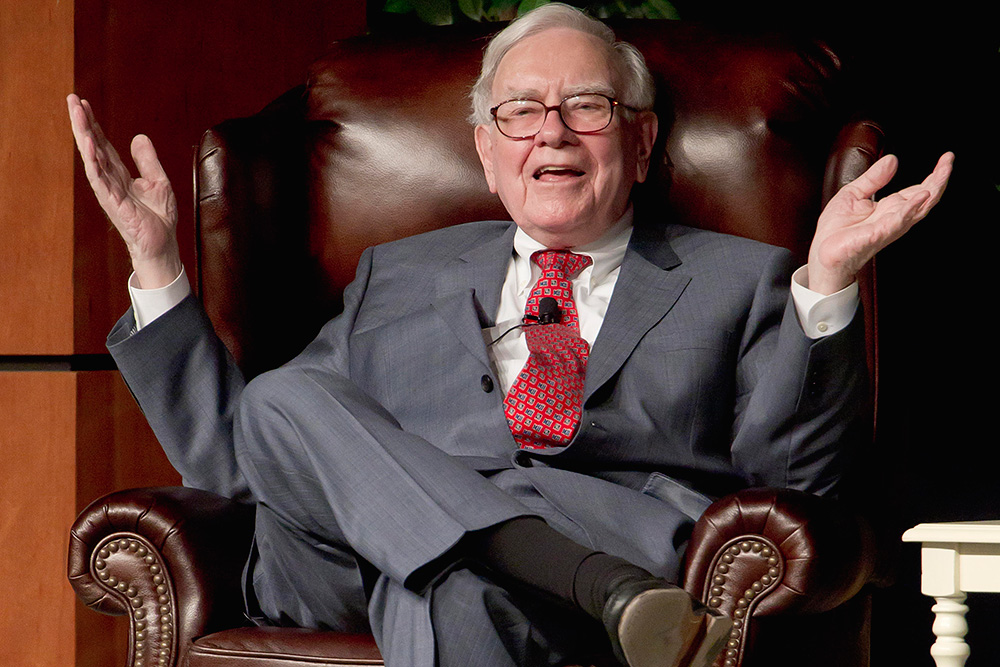
After more than six decades of building one of the world's most influential business empires, legendary investor Warren Buffett has entered a new chapter. Major leadership changes, billions in stock repurchases and enormous cash reserves are raising an important question: what happens to an investment giant after its most famous leader steps aside?
A historic moment for the world's most famous investor
For generations, Warren Buffett has been regarded as one of the most influential figures in global investing.
Known as the Oracle of Omaha, Buffett transformed Berkshire Hathaway from a struggling textile business into a vast conglomerate with operations across insurance, energy, transportation, manufacturing and retail.
His investment philosophy has influenced countless individual investors, business leaders and financial professionals.
But 2026 marks a turning point in the company's history.
After stepping down as chief executive at the beginning of the year, Buffett made another significant decision in September.
He relinquished his position as chairman of Berkshire Hathaway, completing an extraordinary leadership transition.
Although he remains involved as chairman emeritus and a member of the board, the day-to-day management of the company has passed to a new generation.
The leadership change that caught investors' attention
On January 1, 2026, Greg Abel officially succeeded Warren Buffett as chief executive officer of Berkshire Hathaway.
Abel had spent years overseeing many of the company's non-insurance businesses and was widely regarded as Buffett's designated successor.
The transition represented a major change for a corporation whose identity had been closely associated with one individual for decades.
Then, on September 18, Berkshire announced another development.
Buffett became chairman emeritus, while his eldest son, Howard G. Buffett, assumed the role of non-executive chairman.
The new leadership structure separates operational management from responsibility for preserving the company's established culture.
Abel directs Berkshire's businesses and major management decisions.
Howard Buffett serves as chairman, with a focus on continuity, governance and Berkshire's long-standing values.
Warren Buffett continues to offer his experience and judgment as a director.
For shareholders, the arrangement raises a significant question: can the company preserve its distinctive investment philosophy while adapting to an increasingly competitive financial environment?
Billions of dollars are already moving
The new management team has begun making important capital allocation decisions.
On November 7, Berkshire Hathaway released its third-quarter financial results for 2026.
The figures showed that the company had repurchased approximately $9.6 billion of its own shares between July and September.
Total repurchases during the first nine months of 2026 reached approximately $14.4 billion.
Share buybacks can return capital to shareholders by reducing the number of outstanding shares.
However, their economic value depends on the price paid and the company's future performance.
The accelerated repurchase activity demonstrates how Berkshire's approach to using its enormous financial resources is evolving under Greg Abel.
Yet the results also showed challenges in some of the company's businesses.
The numbers behind Berkshire Hathaway's latest earnings
Berkshire reported third-quarter operating earnings of approximately $12.7 billion, compared with $13.5 billion in the same period of 2025.
Net earnings attributable to shareholders totaled approximately $22.1 billion, down from $30.8 billion a year earlier.
The decline reflected weaker results in insurance operations and changes in investment gains.
However, other parts of the conglomerate performed more strongly.
Its railroad business, BNSF, reported operating earnings of approximately $1.73 billion.
Berkshire Hathaway Energy generated approximately $1.61 billion.
Manufacturing, service and retailing businesses also contributed to the company's overall performance.
These figures illustrate the advantages and challenges of operating a diversified business empire.
Some divisions may experience weaker conditions while others continue to grow.
The enormous cash reserve attracting attention
One of the most discussed aspects of Berkshire Hathaway is its extraordinary financial flexibility.
At the end of September 2026, the conglomerate held approximately $357 billion in cash and equivalents.
This reserve gives Berkshire considerable capacity to pursue acquisitions, support existing businesses or repurchase shares when management considers the price attractive.
But holding such a large amount of cash also creates questions.
Why not invest more aggressively?
Are there too few attractive opportunities?
And could an unusually large cash position reflect management's preference for caution?
There is no single answer.
Cash provides flexibility during periods of financial uncertainty, but it can also generate lower long-term returns than productive investments.
For Berkshire, the challenge is deciding when an opportunity justifies deploying capital.
This discipline has long been associated with Buffett's investment philosophy.
The simple investment principles behind an extraordinary fortune
Warren Buffett's approach has historically emphasized understanding businesses rather than attempting to predict every market movement.
His strategy is commonly associated with value investing: evaluating a company's underlying economic characteristics and comparing them with the price investors must pay.
Instead of focusing exclusively on short-term stock fluctuations, Buffett has emphasized the importance of durable businesses, capable management and long-term cash generation.
Three themes stand out from his decades of investment experience.
Understanding what you own
Investing in a business requires more than recognizing a popular company name.
An investor should consider its products, competitive position, financial condition and potential risks.
Thinking beyond short-term market movements
Stock prices fluctuate for many reasons.
A company's long-term economic performance and its short-term market valuation are related, but they are not always identical.
Maintaining financial discipline
A successful investment strategy requires understanding potential losses as well as possible returns.
Even experienced investors can make mistakes, and no investment approach guarantees profits.
These principles remain relevant even as markets become more technologically advanced.
Buffett's influence in the age of artificial intelligence
The investment world has changed significantly since Buffett began his career.
Today, artificial intelligence, automated trading systems and advanced data analytics play increasingly important roles in financial markets.
Companies use sophisticated software to analyze financial statements, identify patterns and execute trades.
However, technology has not eliminated uncertainty.
AI systems can process enormous quantities of information, but they cannot guarantee that their predictions will be accurate.
The fundamental questions of investing remain familiar.
Is a business financially sound? Does it have sustainable competitive advantages? Is its valuation reasonable? And what could cause an investment to lose value?
Buffett's legacy provides a useful reminder that powerful technology and sound financial judgment are not interchangeable.
Another major decision involving billions
Beyond his business career, Warren Buffett has committed substantial resources to philanthropy.
In July 2026, Berkshire Hathaway announced that he would donate 12 million Class B shares to four charitable foundations connected to his family.
The donation was valued at approximately $6 billion at the time.
Buffett also described his intention to distribute his remaining Berkshire shares to these foundations by the end of 2034.
The plan reflects an important part of his legacy: transferring substantial wealth to philanthropic organizations rather than retaining it indefinitely.
His children are expected to play significant roles in overseeing those charitable resources.
The scale of the planned donations makes Buffett's philanthropy an important element of the broader story of his fortune.
What happens next for Berkshire Hathaway?
The company's future will depend on how effectively the new leadership team manages an enormous collection of businesses and investments.
Greg Abel faces several important responsibilities.
He must maintain Berkshire's financial strength, evaluate potential acquisitions and balance the interests of shareholders with the needs of operating businesses.
He also inherits a corporate culture shaped by decades of decisions under Buffett and his longtime business partner Charlie Munger.
The challenge will be preserving valuable traditions while responding to changing market conditions.
Investors will continue watching Berkshire's earnings, acquisitions, stock repurchases and cash reserves for evidence of how its strategy evolves.
However, future financial results cannot be determined from past performance alone.
Economic conditions, competition and management decisions will all influence the company's development.
What ordinary investors can learn from this transition
Most individual investors do not manage billions of dollars.
Nevertheless, Berkshire Hathaway's transition highlights broader principles relevant to personal finance.
Financial resilience matters.
Maintaining sufficient liquidity can help households and businesses respond to unexpected events.
Diversification can reduce dependence on one particular source of income or investment, although it cannot eliminate all risks.
And long-term financial planning requires balancing potential opportunities against uncertainty.
Buffett's career also demonstrates the importance of patience.
Yet following the philosophy of a famous investor should not mean copying every investment decision.
Financial circumstances, investment horizons and risk tolerance vary from person to person.
Conclusion: An extraordinary legacy enters a new chapter
Warren Buffett's influence on modern investing is difficult to overstate.
For more than six decades, his leadership helped build Berkshire Hathaway into a globally significant corporation.
The transition to Greg Abel and Howard Buffett marks a new phase in the company's development.
Major share repurchases, substantial cash reserves and changing market conditions will help shape the decisions made by Berkshire's new leadership.
But the most enduring part of Buffett's legacy may not be a particular stock purchase or financial result.
It may be the investment philosophy that encouraged generations of people to think carefully about value, risk and long-term financial decisions.
The billion-dollar question is no longer simply what Warren Buffett will buy next. It is how the investment empire he built will evolve without him in charge.
And that question will remain central to the company's future.