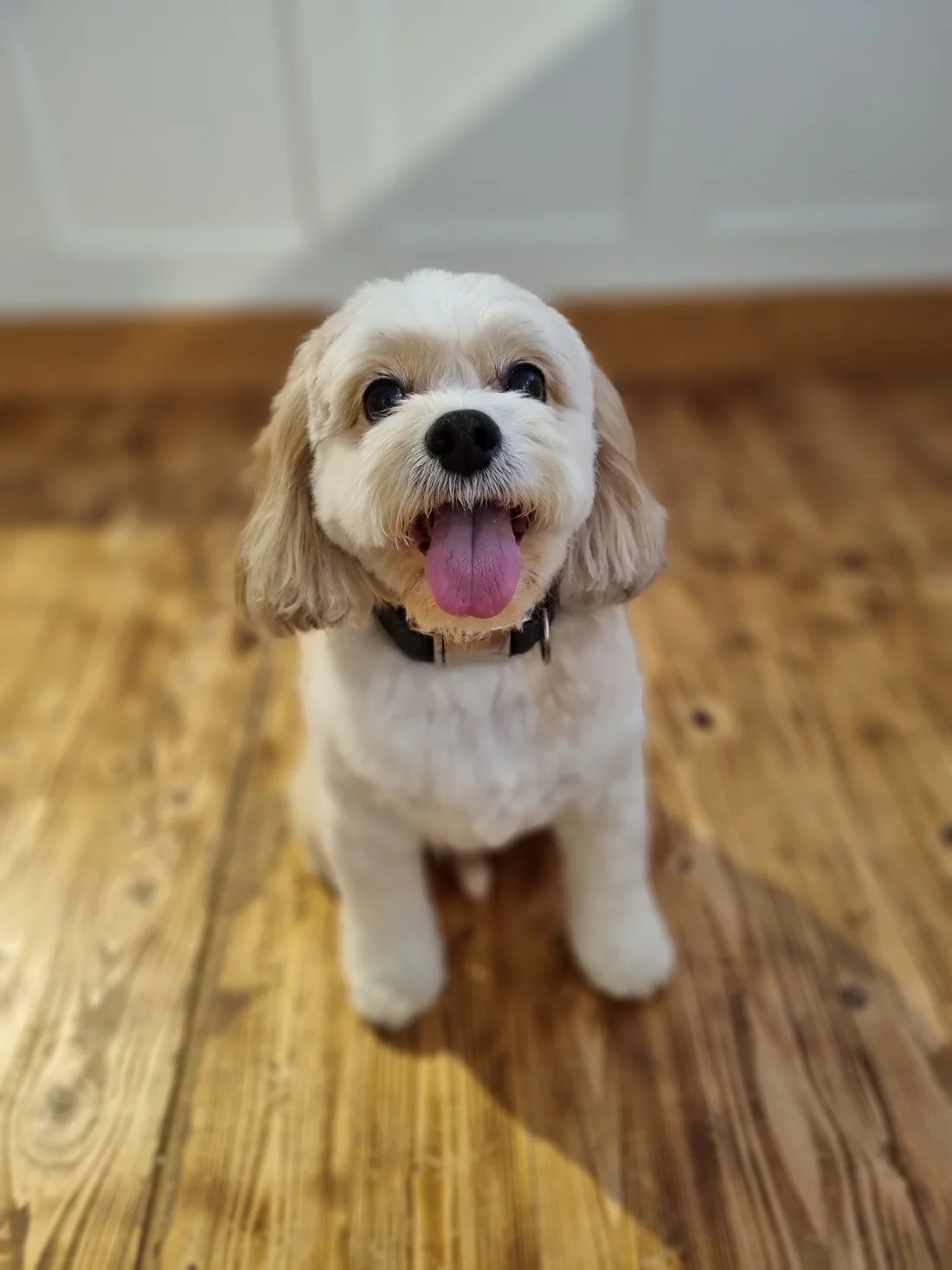
Two dogs sitting side by side might look completely different, behave in completely different ways, and require completely different grooming routines — even if they're the same size. Coat type is one of the most important variables in pet care, and understanding it helps owners set realistic expectations, choose the right tools, and plan a home maintenance routine that actually works.
This article walks through the main categories of dog coat types, what characterises each one, what tends to go wrong without proper care, and what a sensible grooming approach looks like for each.
Why Coat Type Matters More Than Breed Name
It's tempting to look up grooming needs by breed — and for purebred dogs, that can be a reasonable starting point. But coat type tells you more about what a dog actually needs than the breed label alone. A Goldendoodle might have a tight Poodle-like curl or a looser, wavier texture depending on which parent's genetics dominated. Two Labrador Retrievers from the same litter can have coats that feel noticeably different. And mixed-breed dogs are often a complete unknown until the coat matures.
Learning to identify coat type by what you can observe and feel — texture, length, shedding behaviour, density — gives you a more reliable foundation than breed generalisation.
Short, Smooth Coats
Short, smooth coats lie flat against the body and have a glossy, sleek appearance. They're the result of a single layer of relatively coarse guard hairs with minimal or no undercoat. Breeds in this category include Boxers, Beagles, Dalmatians, Greyhounds, Vizslas, and Dachshunds.
The main characteristic of a smooth coat is its low maintenance demands — it doesn't tangle, mat, or grow beyond a fixed length. However, it does shed. Some smooth-coated dogs are surprising shedders, producing a constant fine layer of short hairs that can be harder to vacuum up than the longer fur from a Golden Retriever. Regular brushing with a rubber curry brush or a natural bristle brush once or twice a week removes loose fur, distributes natural coat oils, and keeps the coat looking clean.
These dogs generally need professional grooming less frequently — every 8–12 weeks is typical, primarily for bathing, nail trimming, and ear cleaning. The skin, however, deserves attention: some short-coated breeds are prone to dry skin or skin fold irritation, so choosing the right shampoo matters.
Common tool for smooth coats: A rubber curry brush or grooming mitt used in circular motions loosens dead hair effectively and most dogs find it enjoyable.
Double Coats — Medium Length
The double coat is one of the most common coat structures in domestic dogs and the one that produces the most shedding. It consists of a dense, soft undercoat that provides insulation, sitting beneath a longer, coarser outer coat of guard hairs. The undercoat does the work of regulating body temperature in both cold and warm weather — which is why shaving a double-coated dog is generally counterproductive rather than helpful.
Breeds with medium double coats include Labrador Retrievers, Golden Retrievers, Border Collies, Australian Shepherds, Corgis, and many herding and working breeds. The coat sits at a medium length — typically between 3 and 8 centimetres on the body, longer on the tail and trousers.
Double-coated dogs shed year-round at a moderate rate and then shed heavily — sometimes dramatically — during seasonal transitions in spring and autumn. This "coat blow" is the dog releasing its undercoat in preparation for the season ahead. During these periods, the amount of loose hair a dog can produce in a single brushing session is remarkable.
Home brushing with a slicker brush and an undercoat rake two to three times per week manages everyday shedding. A metal comb is useful for checking for hidden knots, particularly around the neck, behind the ears, and in the armpits. Professional grooming every 6–8 weeks, with a deshedding treatment during seasonal transitions, keeps things under control.
Long, Silky Coats
Long-coated breeds — Shih Tzus, Lhasa Apsos, Afghan Hounds, Maltese, Yorkshire Terriers — have fine, silky hair that grows continuously and flows downward. The coat doesn't have a distinct undercoat in the same way as double-coated breeds; instead, it's a single layer of long, soft hair that can reach floor length in breeds kept in a show coat.
The obvious challenge with long coats is tangling. Fine, long hair catches on itself easily, and without daily or near-daily brushing, mats develop quickly. The most common mat locations are behind the ears, under the collar, in the groin and armpit areas, and where the legs meet the body. These are the places where friction is highest and fur rubs against itself constantly.
A pin brush or slicker brush used gently through the full length of the coat, followed by a wide-tooth comb to check for hidden tangles, is the standard home routine. Working section by section rather than trying to brush the whole coat at once reduces breakage and makes the process more comfortable for the dog.
Professional grooming every 6–8 weeks is standard for dogs in a long coat. Many owners opt to keep the coat trimmed to a shorter, more practical length — sometimes called a "puppy cut" — which reduces daily maintenance considerably. These dogs still need professional grooming, but at a more manageable interval.
Curly and Wavy Coats
Poodles, Bichons, Portuguese Water Dogs, and the many Poodle crosses that have become popular over the past two decades all have some variation of a curly or wavy coat. What distinguishes this coat type from others is that the hair grows continuously without a natural stopping point — unlike a Labrador's coat, which reaches a fixed length, a Poodle's coat will keep growing indefinitely unless trimmed.
Curly coats also have a particular tendency to mat, not because they're inherently more fragile, but because the curling structure traps shed hair within the coat rather than allowing it to fall away naturally. When a curly-coated dog sheds, the dead hair has nowhere to go — it gets caught in the living coat around it, and if not brushed out, those accumulated fibres tighten into mats.
The practical implications are significant. Curly-coated dogs need brushing every two to three days with a slicker brush, working through the coat methodically. Any area that feels dense or resistant to the brush should be worked through gently with fingers first before applying the brush. If a mat has already formed, a dematting comb is useful, though tight mats close to the skin may need to be cut out.
Professional grooming every 4–6 weeks is typical for most curly-coated dogs. Owners who can commit to daily brushing at home may be able to extend the interval slightly, but the continuous growth of the coat means that trimming cannot be indefinitely delayed without the coat becoming unmanageable.
On the topic of doodle coats: Coat texture in Poodle crosses is highly variable and unpredictable. A Goldendoodle from one litter might have a loose, wavy coat that sheds moderately; a sibling might have a tight Poodle curl that requires intensive maintenance. There is no reliable way to predict which variation a puppy will develop until the coat matures, usually around 12–18 months.
Wire and Rough Coats
Wire-coated breeds — terriers, Schnauzers, many German and Belgian working breeds — have a distinct coat structure: a dense, bristly outer coat that feels rough to the touch, sitting over a softer undercoat. The wire texture comes from the structure of the individual hair shaft itself.
Traditionally, wire coats were maintained through a technique called hand-stripping, which involves pulling dead outer coat hair by the root rather than cutting it. This preserves the harsh texture of the coat and is preferred in show dogs. For most companion dogs, clipping has replaced hand-stripping for practical reasons — it's faster and easier, though it does soften the coat texture over time.
Wire-coated dogs benefit from brushing once or twice a week with a stiff slicker brush and regular professional grooming every 8–10 weeks. The coat doesn't tangle as readily as silky or curly coats, but it can accumulate debris and the undercoat can become dense without regular maintenance.
Understanding What Your Dog Has
If you're unsure what coat type your dog has, a professional groomer is a good person to ask — they can assess the texture, density, and shedding behaviour of the coat and suggest a routine tailored to it. This is particularly useful for owners of mixed-breed dogs, where coat type can be genuinely unpredictable.
What matters most is not labelling the coat type perfectly, but understanding what it does and doesn't need. A coat that mats easily needs more frequent brushing than one that doesn't. A coat that grows continuously needs regular trimming. A coat that sheds heavily needs tools designed to reach the undercoat. Starting from observation rather than assumption tends to produce a routine that actually suits the individual dog.